There are no items in your cart
Add More
Add More
| Item Details | Price | ||
|---|---|---|---|
A structured programme that helps young children settle their bodies and minds, and build the ability to focus for longer, through breathing, mindfulness and meditation adapted for their age.
Focus is a skill, and it can be trained. Six one-to-one online sessions, with daily practice at home, help your child build it through repetition and consistency.
Most parents try hard to help. They remind, repeat and reward, and each of these comes from real care. The difficulty is that these responses treat the symptom, not the skill. A reminder gets the task finished once, but it doesn’t teach the child how to notice when their attention has drifted and bring it back. A reward may work for a single afternoon, but it doesn’t build the habit of staying with something because it is worth doing.
When a young child is rushed or scolded for losing focus, their stress rises, and a stressed body finds it even harder to settle. The child may comply on the outside while the attention underneath remains scattered.
What young children need is a way to train attention itself: a calm body to begin from, a simple method for returning to a task, and daily repetition until the skill becomes their own. That is what this programme is designed to give them.
When attention isn’t trained at this age, the effects can build over time.
In Childhood (Present):
In Adolescence & Adulthood (Future):
Early support matters because the attention skills a child learns at this age become the foundation for everything that follows.
Get our information brochure for the Focus and Concentration Programme for Children Aged 4 to 6, and see how breathing, mindfulness and meditation can help your child settle, stay with a task and return to it with confidence.
The Focus and Concentration Programme for children aged 4 to 6 is a six-week online programme that helps young children settle their bodies and minds, and build the ability to focus for longer. Each week builds on the one before, so your child grows steadily from calming their body and breath to holding their attention on a task, even when something tempts them away.
Each session is a one-to-one online session led personally by Ms Darshan Bawa, founder of BodhiShishu, at a pace that suits your child. Between sessions, your child practises at home for a few minutes a day, using breathing, mindfulness and meditation adapted for young children. You receive a short update after each session, so you can see what your child is working on and how to support it at home.
The programme rests on two principles: repetition and consistency. Daily practice is what turns a new skill into a lasting habit, and that is why the programme is built around short, regular steps rather than occasional long sessions.
Children learn in different ways. Some learn best by seeing, some by hearing and some by touching and moving. In the Focus and Concentration Programme for Children Aged 4 to 6, each skill is taught through all three of these approaches: visual (Watch), auditory (Listen) and kinesthetic (Feel). Every child receives all three in every session, so no child is limited to one way of learning.
Each week, the same skill is presented in three forms.
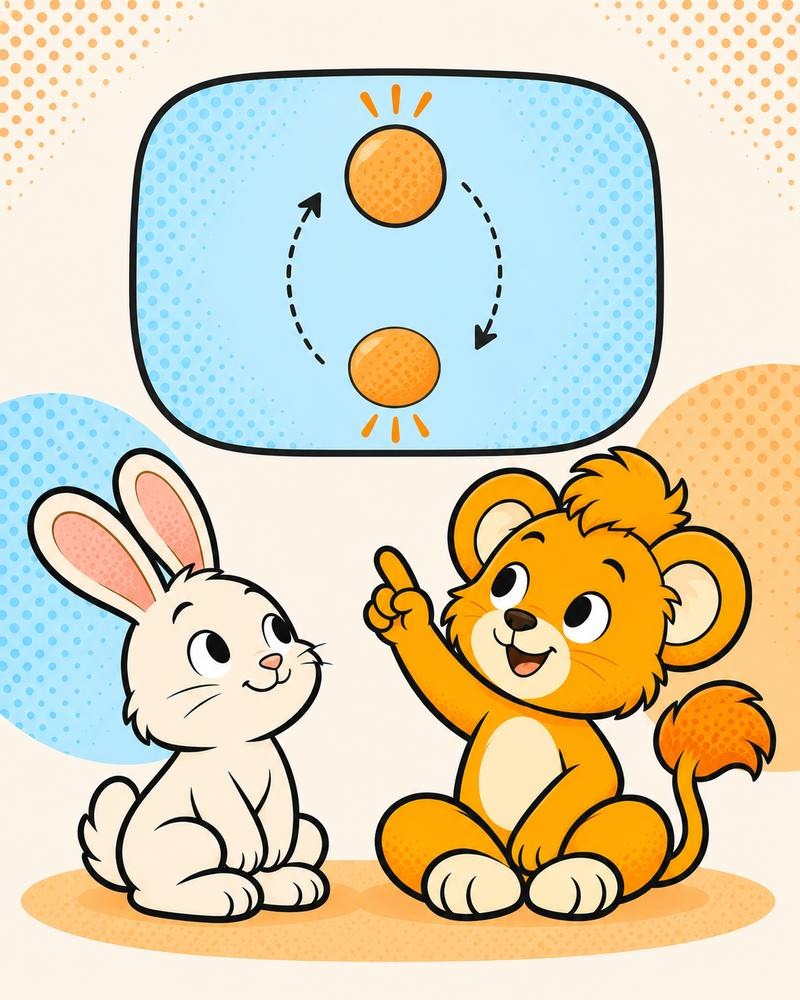
Children see the technique in action first, with a clear picture of what to do. Pictures, colours and simple movement help them hold the idea in mind.
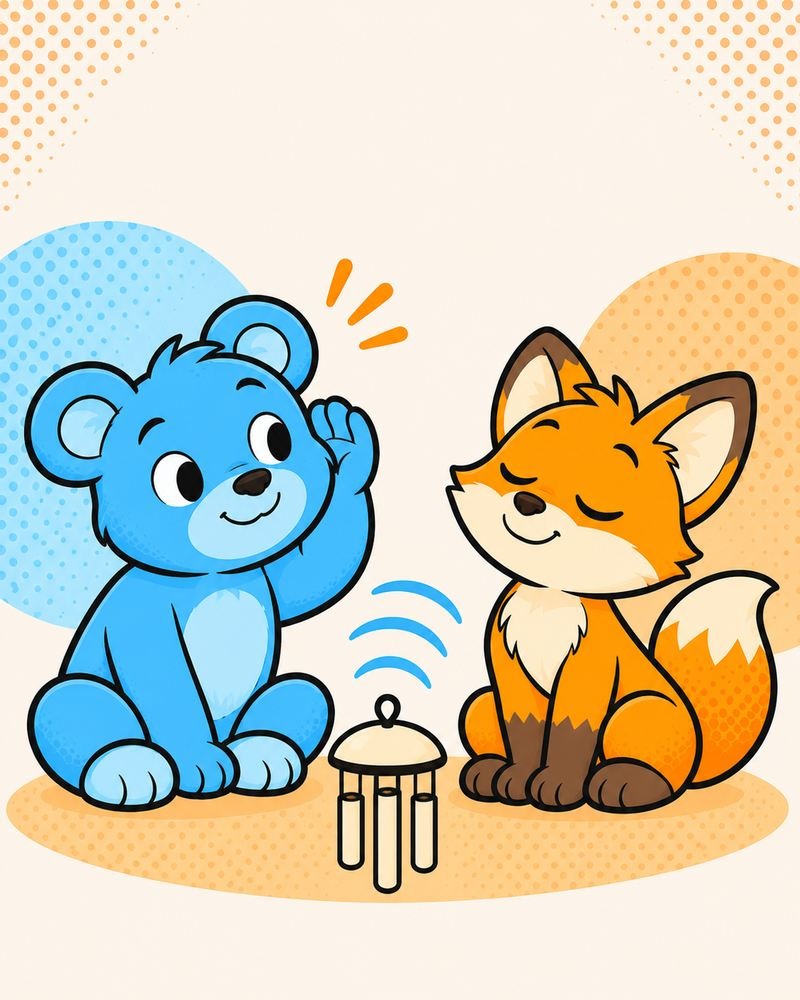
Children hear the technique through a sound, a rhythm or a spoken cue. A gentle “shhh” or a chime helps them follow the moment without needing to look.
Children practise the technique through their own bodies, by resting a hand on their belly, holding an object or pressing their feet to the floor. Feeling the skill makes it easier to remember when they need it.
Children who respond quickly to one form still benefit from the others, and children who find one form harder are supported by the other forms. Over six weeks, this helps every child build focus that holds up across different moments and different settings.
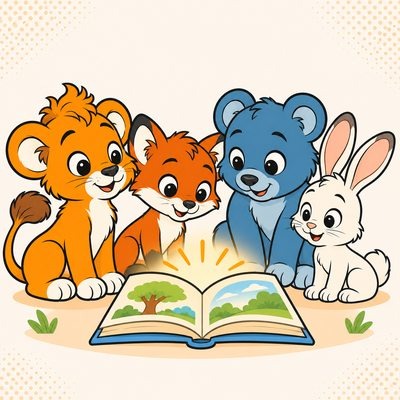
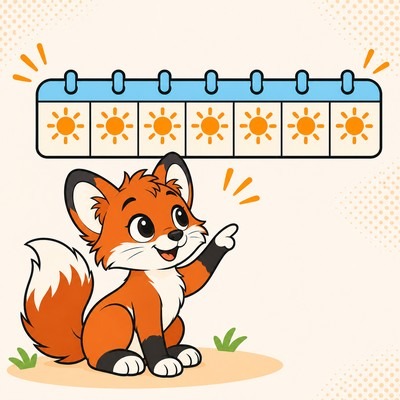
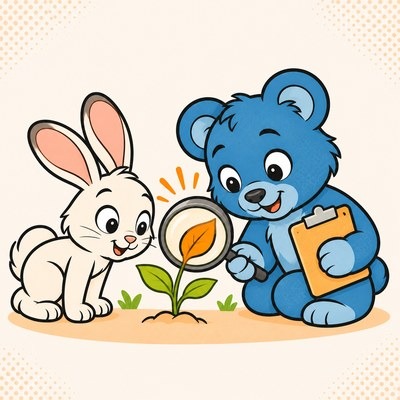
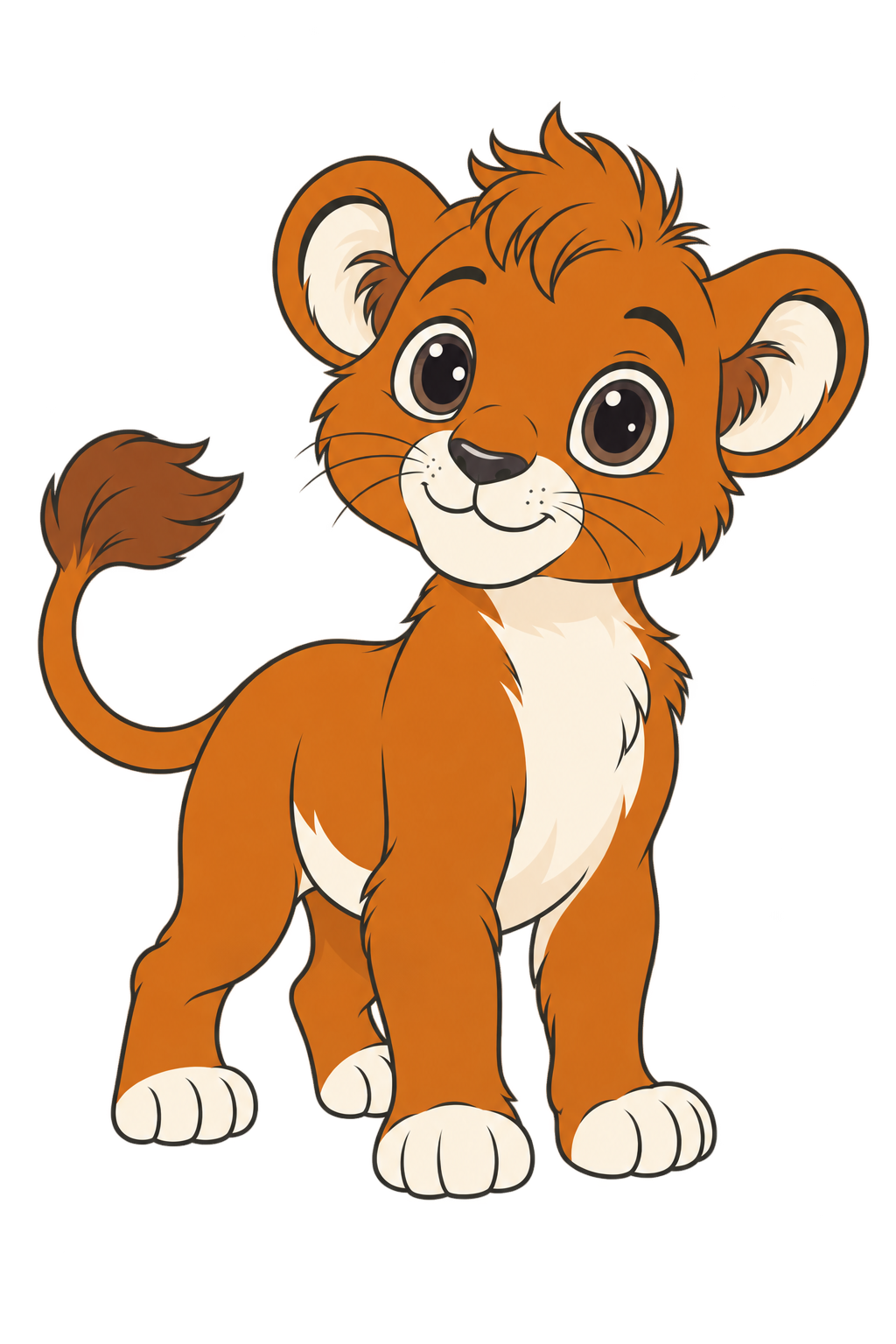
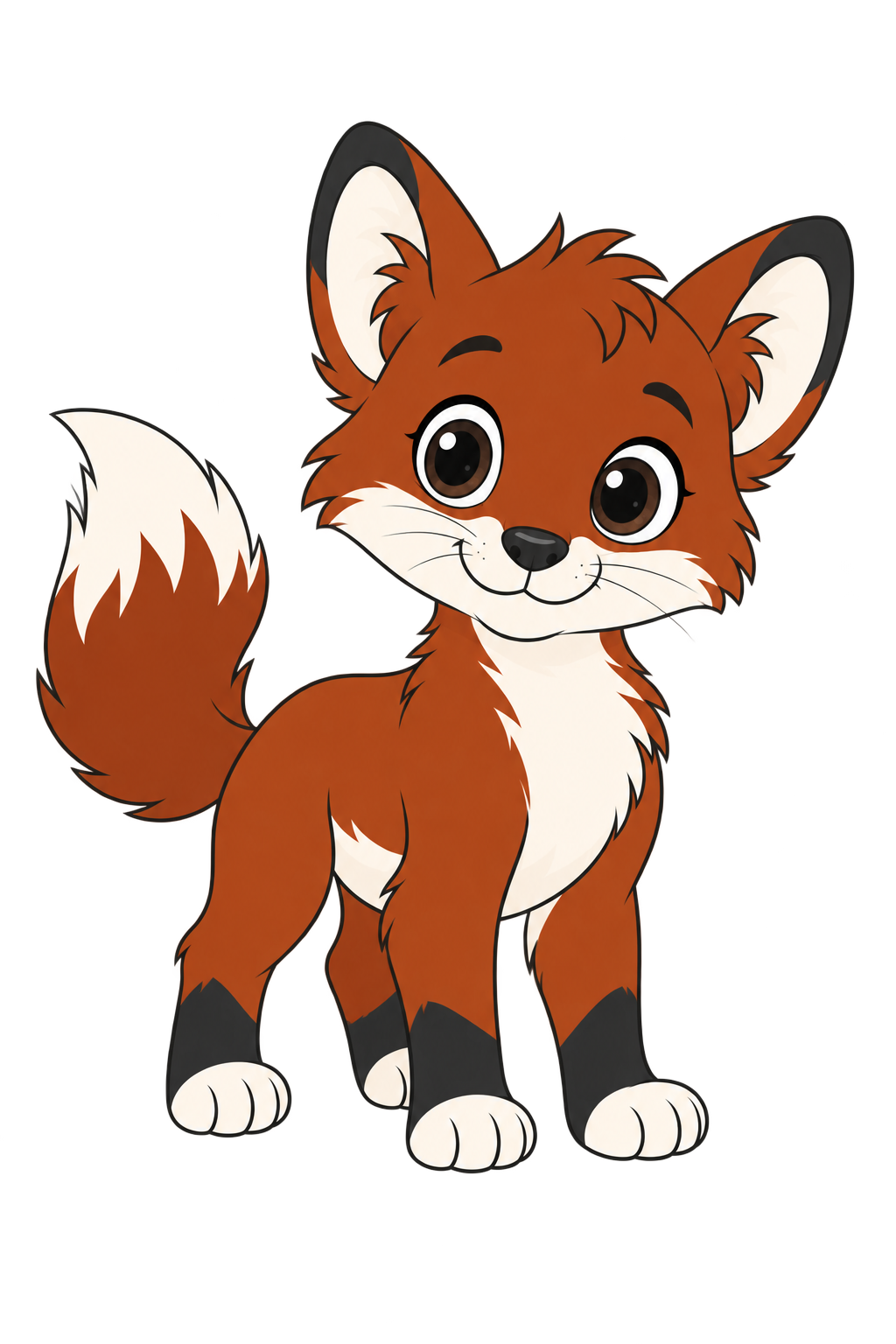
Young children learn focus best through stories they can picture. Magnet the lion cub, Lina the fox cub, Rio the bear cub and Pip the rabbit guide children through everyday moments where attention is tested, such as waiting, listening and finishing a task. Children see how focus feels through characters they recognise, rather than through instructions they may not yet understand.
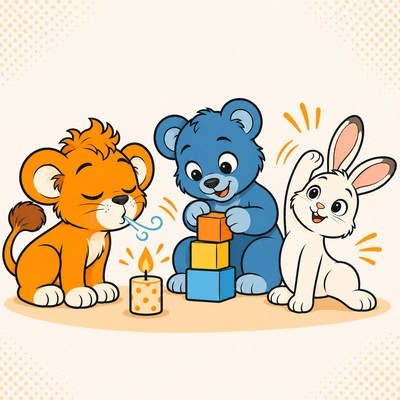
Each week builds attention through activities children do with their hands and bodies. They breathe slowly as if blowing out a candle, notice how their body feels when it is still, and practise returning their attention to one thing. Children learn through doing, which is how this age absorbs new skills..
A short daily practice, with the same cue, activity and anchor phrase each day, helps focus become automatic. Consistency at this age is what makes the change last well beyond the six weeks, and it is why the programme is built around short, regular steps rather than occasional long sessions.
The programme is delivered online, with no equipment to buy. Children stay in familiar surroundings, and parents can see the learning as it happens, so they know what their child is working on and how to support it at home.
After each session, parents receive one observation, one moment to celebrate and one practical suggestion for home. Parents know what to look for and how to support their child between sessions.
Every breathing, mindfulness and meditation practice in the programme is grounded in research on how attention develops, then adapted for the stage and needs of children aged 4 to 6. Each technique is designed to be simple enough to repeat every day, so the benefits build over time.
A structured focus and concentration programme that runs for six weeks, so your child has time to build skills that last.
One-to-one sessions with Darshan, one each week, each introducing a new skill for focus through short, age-appropriate practices.
Focused sessions that fit comfortably into a young child’s attention span, held on a video call from home.
Short daily practice between sessions, using the same routine each day, so breathing and focusing become a habit.
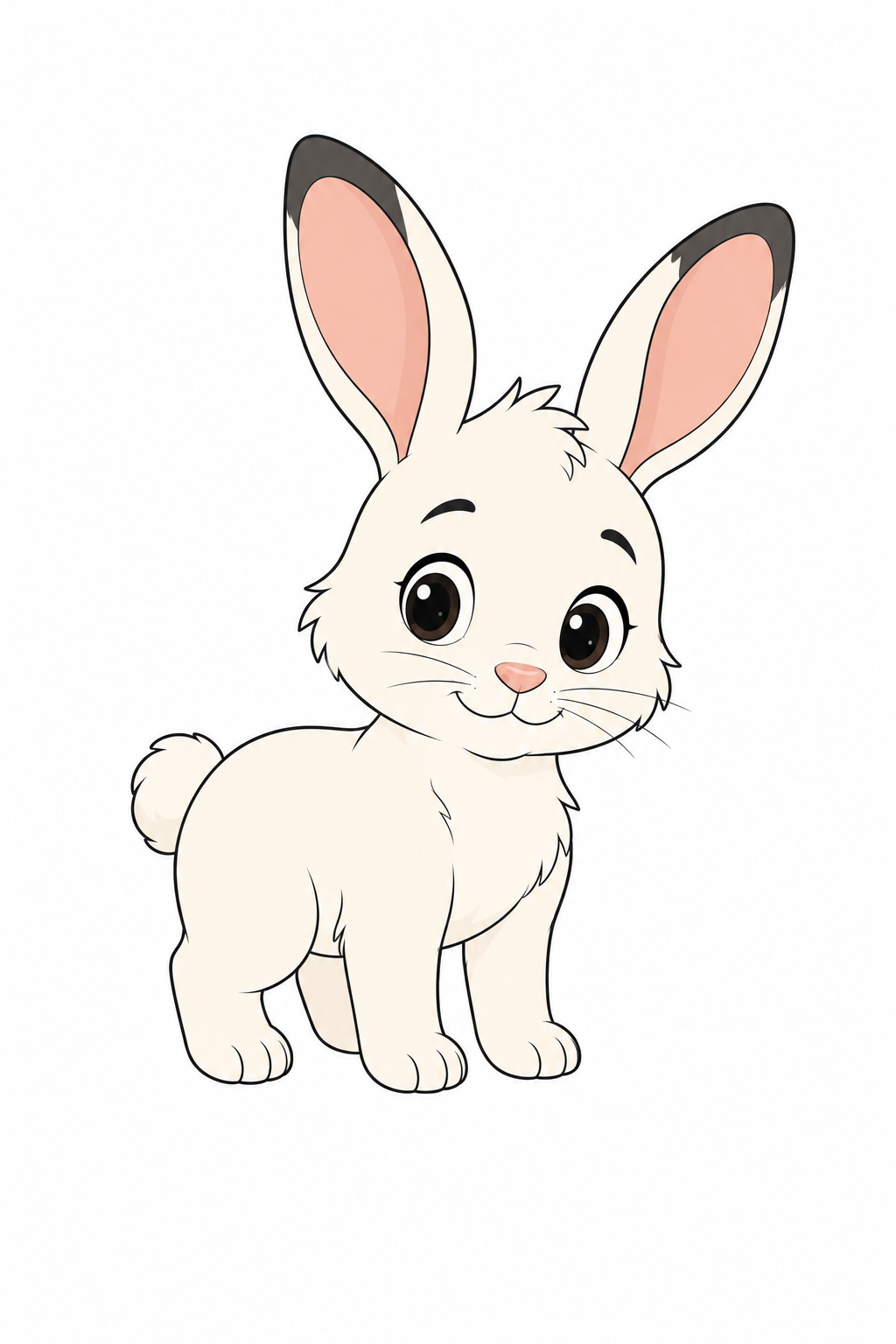
The Animal Cast is the group of animal characters that children aged 4 to 6 learn with throughout the focus and concentration programme. Each character helps young children notice their attention in everyday moments, so the learning comes through stories they can picture.
Magnet is the anchor character of the programme, appearing across the six weeks and returning in each new story to help children settle, notice and come back to what they are doing.
Lina is one of the storytellers who takes turns narrating the weekly stories, giving children a familiar friend to follow from session to session.
Rio is one of the storytellers who takes turns narrating the weekly stories, bringing a different voice and perspective to each week’s lesson.
Get our information brochure for the Focus and Concentration Programme for Children Aged 4 to 6, and see how breathing, mindfulness and meditation can help your child settle, stay with a task and return to it with confidence.
Your child learns to settle their body, so that attention has a calm place to begin.
Your child learns to notice how their body feels when it is still, and to find comfort in staying put for a moment.
Your child learns that a wandering mind is normal, and practises bringing their attention back gently.
Your child learns to notice what is happening right now, and to stay with it for a little longer.
Your child learns to recognise when their attention has drifted, and to find their way back without needing a reminder.
Your child practises staying with a task even when something nearby is competing for their attention.
Focus does not arrive in a single lesson. It grows through the same kinds of practice, returned to again and again, until a young child can settle without being reminded. The programme rests on two pillars that help that growth last.
Young children learn by doing the same thing many times. Each week, the breathing game, the sensory activity and the story with the Animal Cast return in familiar form, so the child begins to recognise what comes next and what to do. Repeated practice gives attention a chance to become a habit, so that settling and returning to a task start to feel easier over time.
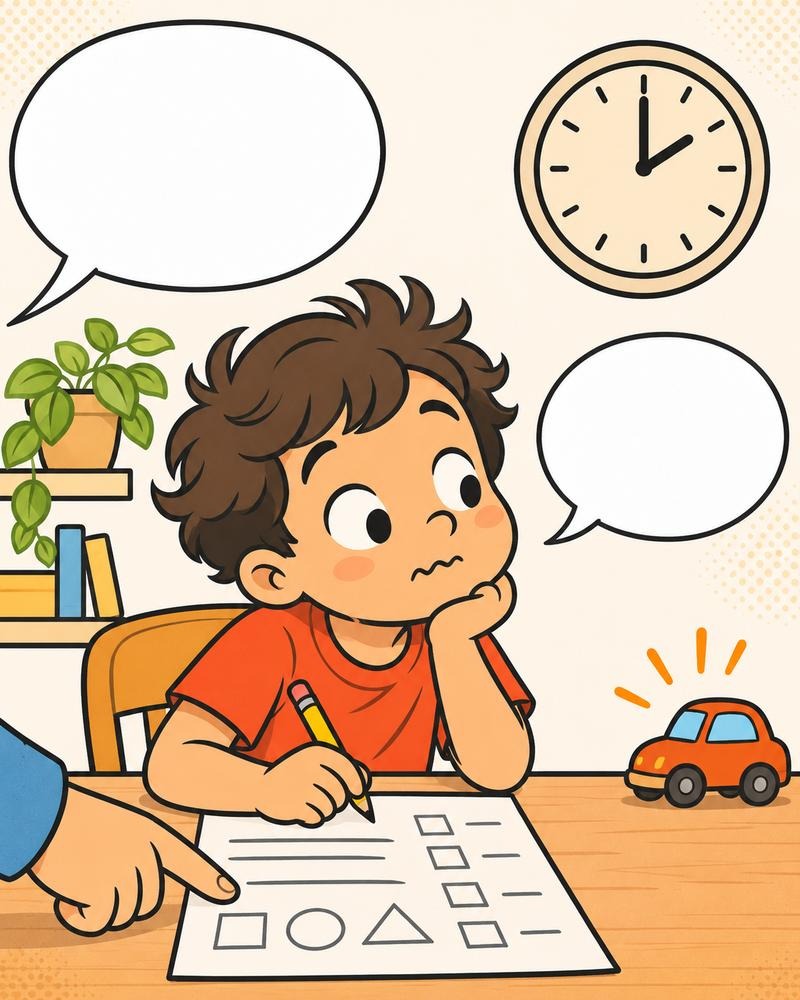
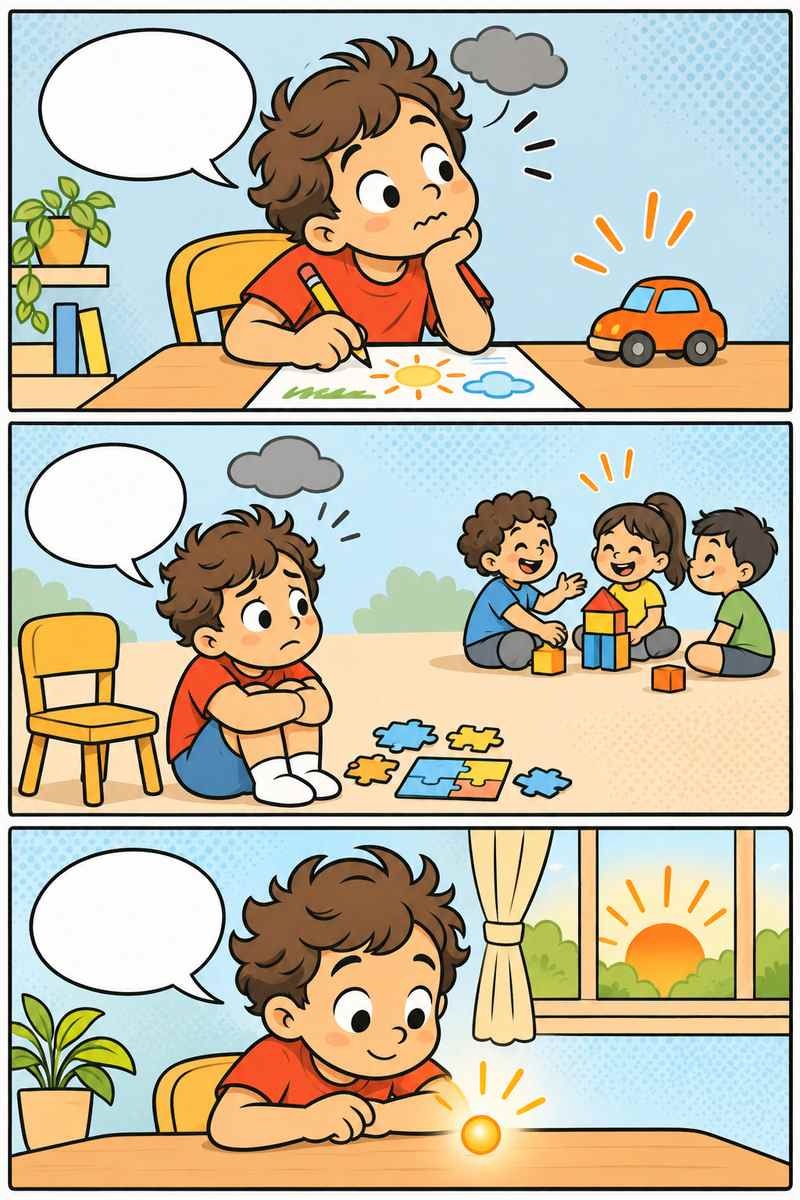
Attention is closely tied to feelings. A child who feels restless, frustrated or overwhelmed will often find it hard to stay with a task, and a child who feels calm and curious can settle into one more easily. The Focus and Concentration Programme for Children Aged 4 to 6 works with these feelings directly, so that children learn to notice them and return to what they are doing.
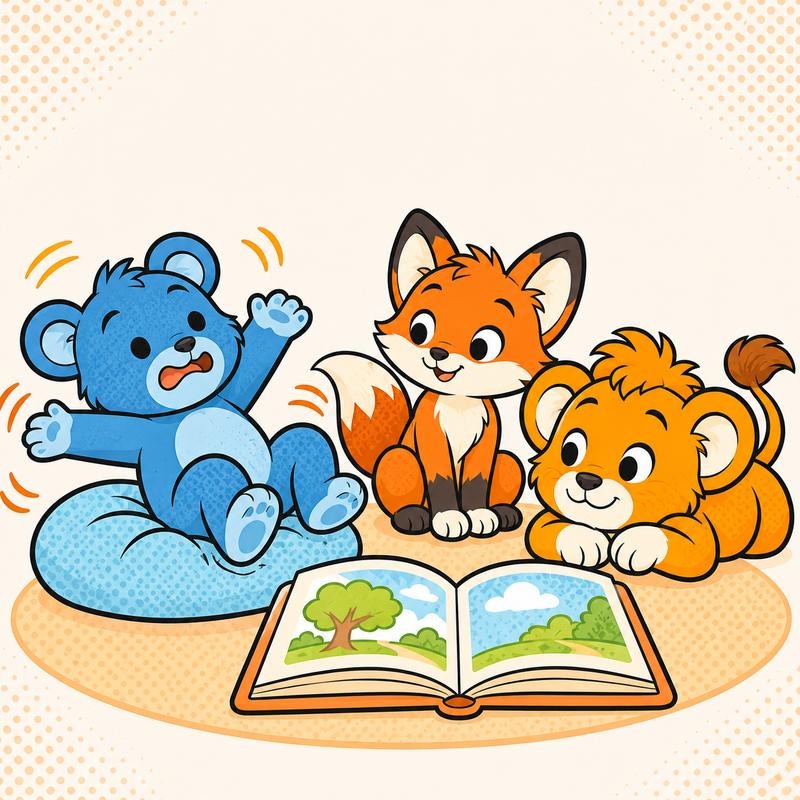
A child who cannot stay still during a story may be looking for a way to release energy. The programme uses movement and breathing games to help the child settle, then brings attention back to the story.
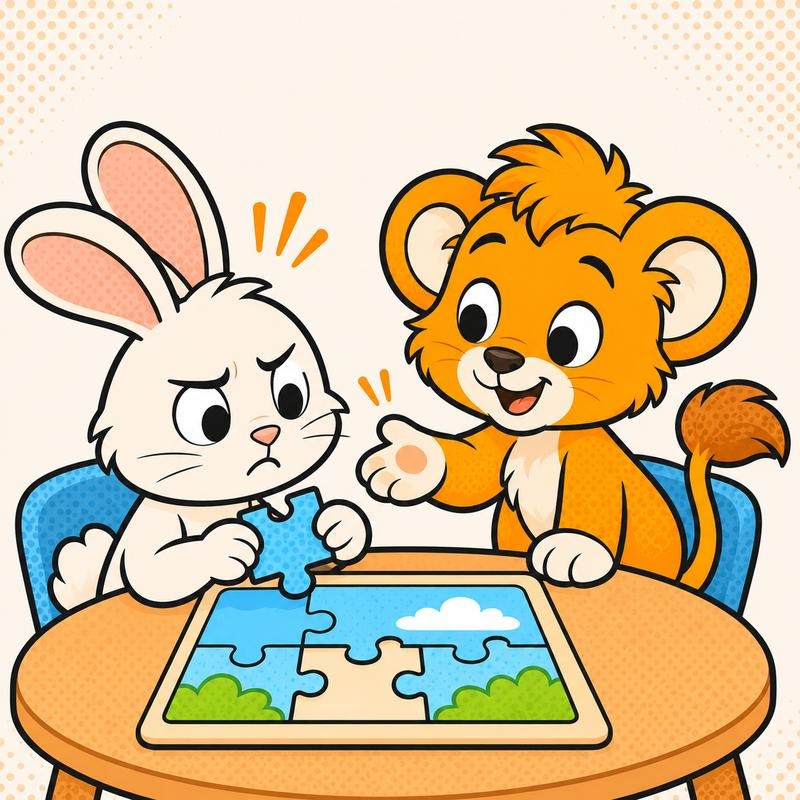
When a puzzle or drawing does not go as expected, a young child may give up quickly. The programme helps children name the feeling, pause, and try again with a small, manageable step.
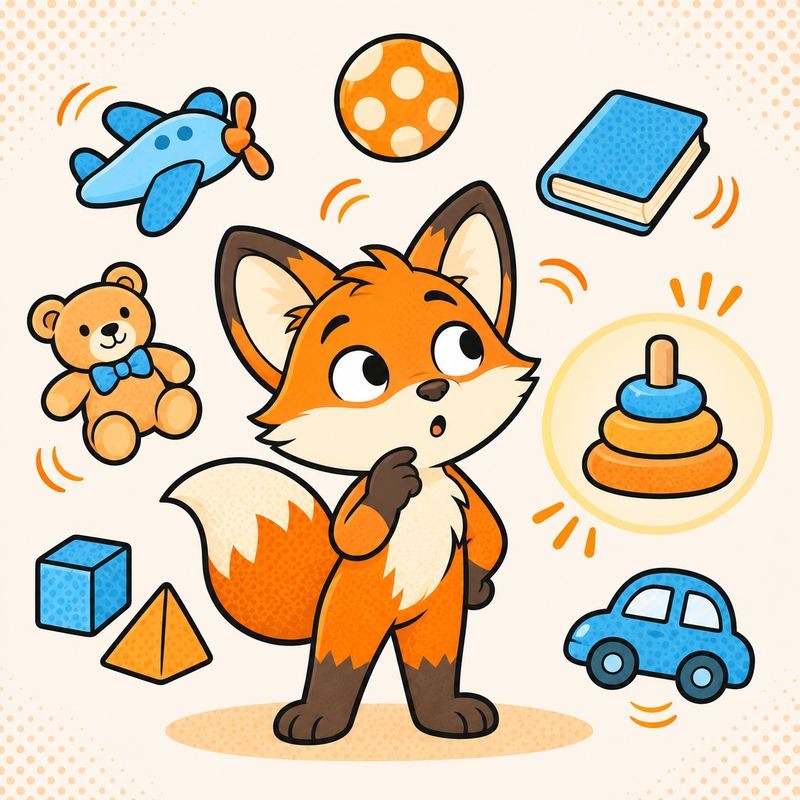
Noise, toys and other children can pull attention in many directions. The programme gives children simple ways to notice what is around them and then choose one thing to focus on.
Waiting for a turn or for a meal can be difficult for a young child. The programme practises short moments of stillness so that waiting feels less like a struggle.
Children can move quickly from one game to the next without finishing anything. The programme helps them notice when their attention has drifted and return to the activity they chose.
Get our information brochure for the Focus and Concentration Programme for Children Aged 4 to 6, and see how breathing, mindfulness and meditation can help your child settle, stay with a task and return to it with confidence.
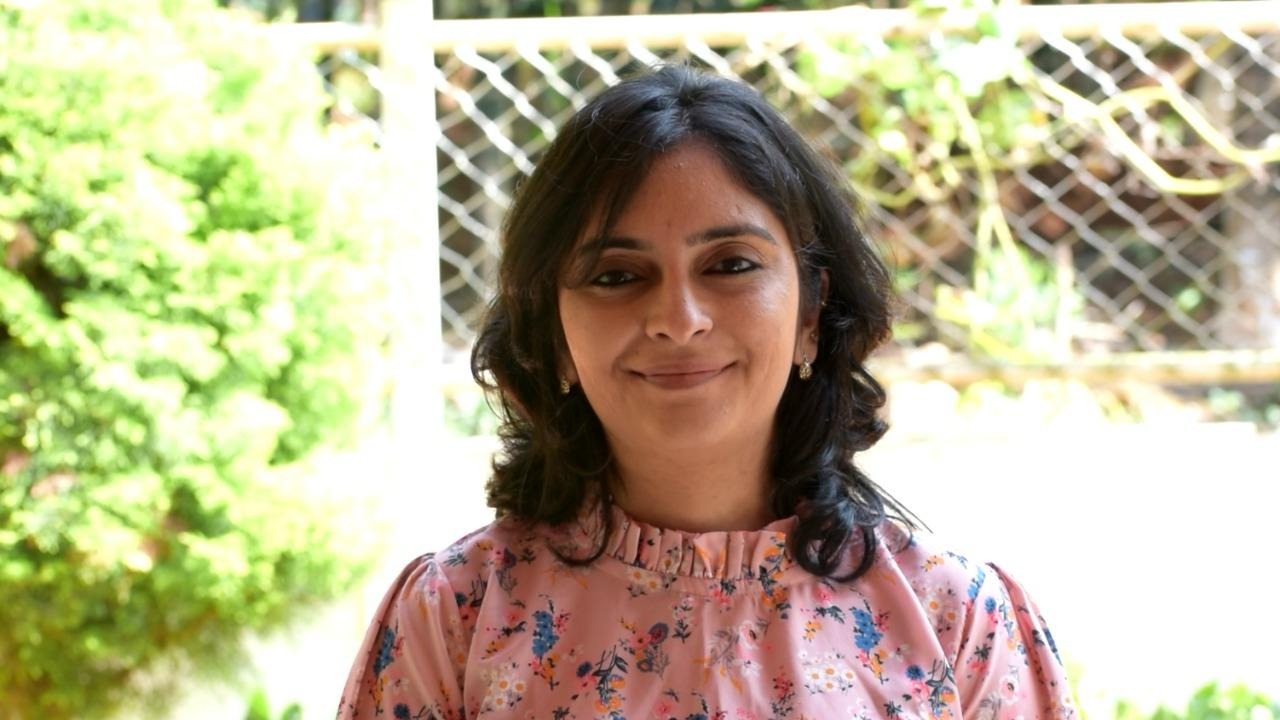
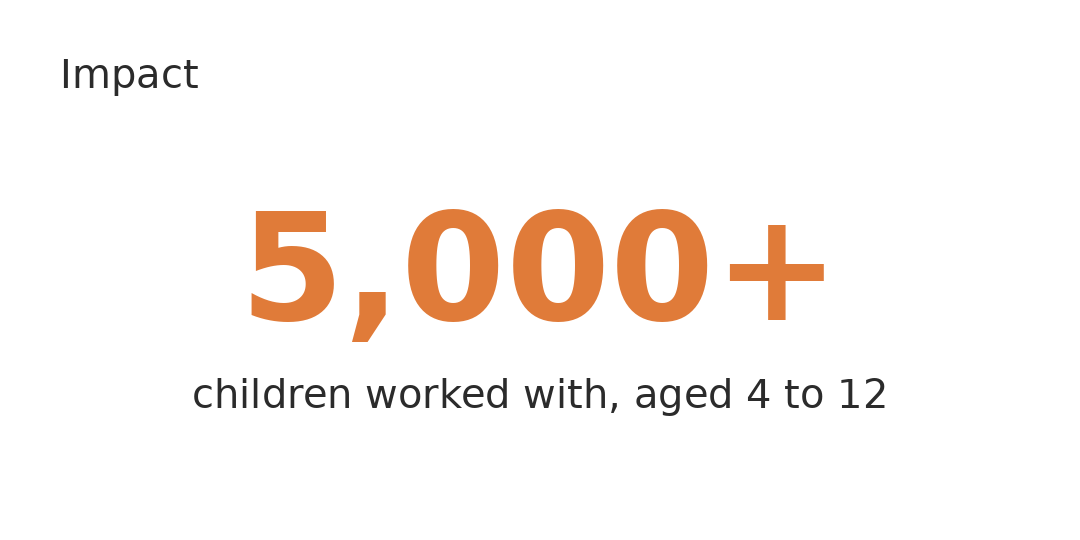
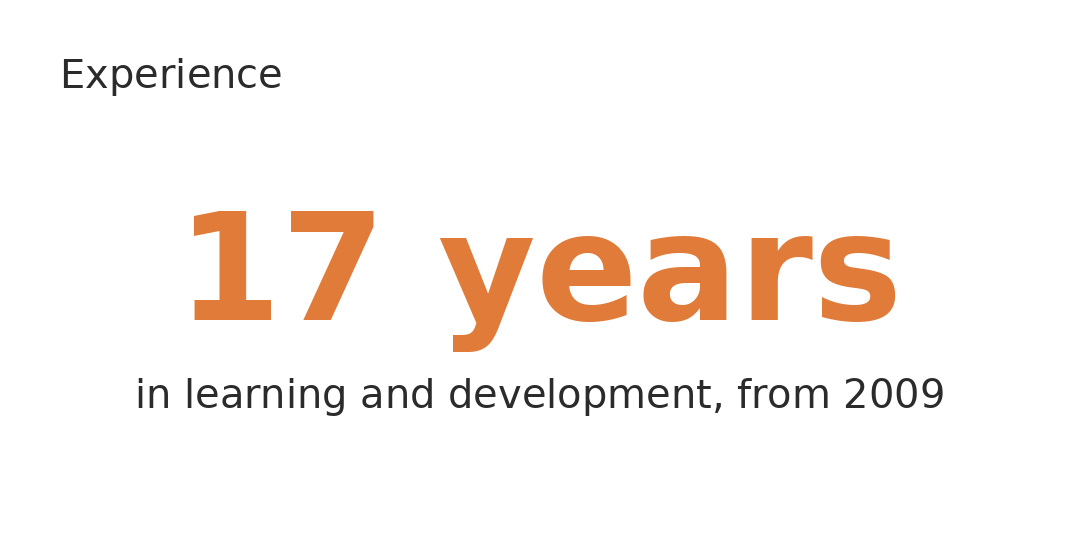
Ms Darshan Bawa is the founder of BodhiShishu, a child development company that helps children aged 4 to 12 build emotional intelligence, focus and confidence. She has worked in learning and development since 2009, and she has been working directly with children since 2016. Her work centres on helping children understand and manage their feelings in ways that last.
Under her leadership, BodhiShishu has supported more than 5,000 children through structured, research-informed programmes.
Her approach, the BodhiShishu Method™, is built around the belief that every child grows at their own pace, and that connection comes before correction. Parents work with her directly, so each child is supported by someone who knows their progress.
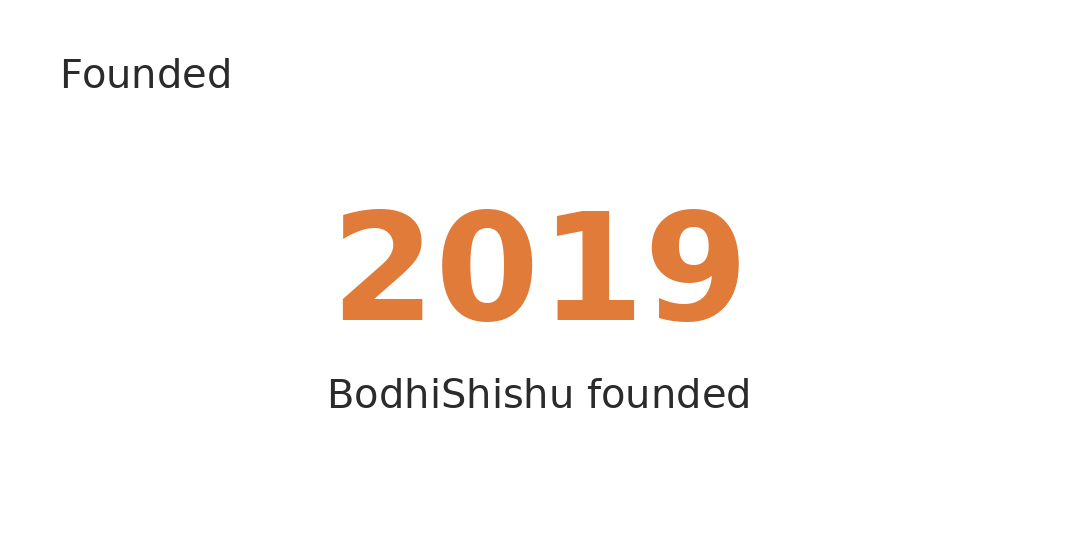
Ms Darshan Bawa is Berkeley Certified in Emotional Intelligence. BodhiShishu was founded in 2019, incubated at IIM Bangalore and Stanford Seed, and has been featured in The Times of India. Parents can read more about her story, her qualifications and the BodhiShishu approach on our About Us page.
91%
89%
93%
The Focus and Concentration Programme for Children Aged 4 to 6 is designed for young children who find it hard to settle, stay with a task, or return to an activity after being distracted. Every child grows at their own pace, so the programme moves at a rhythm that suits each child.
No. The programme uses stories, movement, breathing games, sensory play and the Animal Cast characters, so children learn through play and experience.
Each live session is designed to be short enough for young children to stay engaged, and parents receive guidance on how to support the learning between sessions.
The daily practice is brief, designed to fit into ordinary routines at home, so that it can become a regular habit without adding pressure to the day.
Each week focuses on one skill, moving from breathing and sensory regulation to meditation, mindfulness, noticing and recovering focus, and selective attention. The skills build on one another, so each week strengthens the one before it.
Parents are partners in the programme. They receive simple guidance on how to reinforce the week’s skill at home, and they learn to notice their child’s progress in everyday moments.
The skills taught in the programme, such as settling, noticing and returning to a task, are useful in any setting. Many families find that the calmer, more focused habits they see at home carry into the classroom.
You can reach the BodhiShishu team directly on WhatsApp to ask questions or request the information brochure.
Yes. The programme is designed for young children who find it hard to settle, stay with a task, or return to an activity after being distracted, so it suits children who face these challenges at home, in school, or in both places.
Get our information brochure for the Focus and Concentration Programme for Children Aged 4 to 6, and see how breathing, mindfulness and meditation can help your child settle, stay with a task and return to it with confidence.
 Launch your Graphy







 Restlessness during story time
 Frustration when a task feels too hard
 Distraction in a busy room
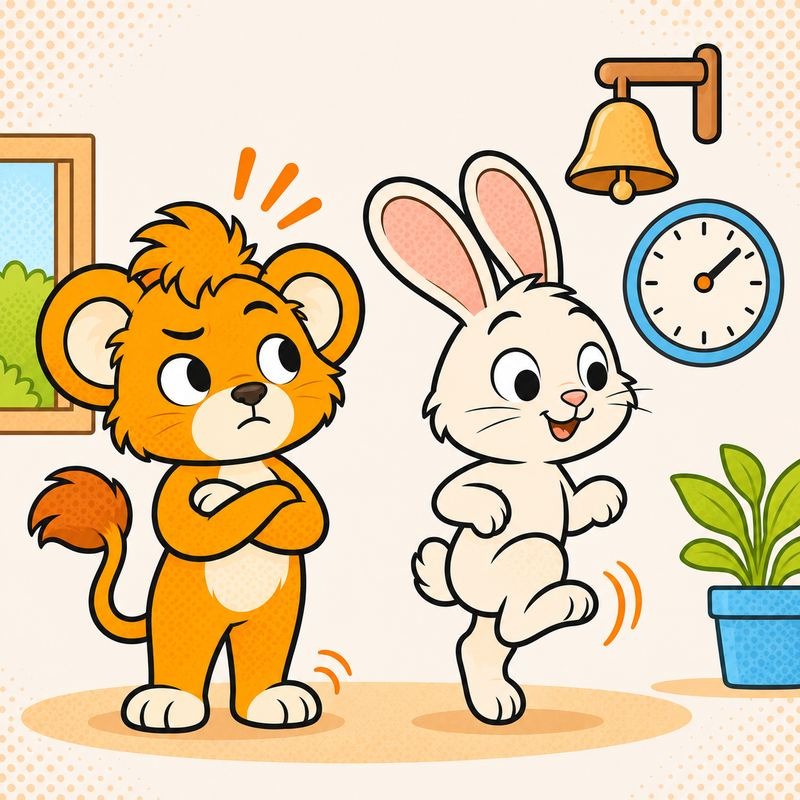 Impatience while waiting
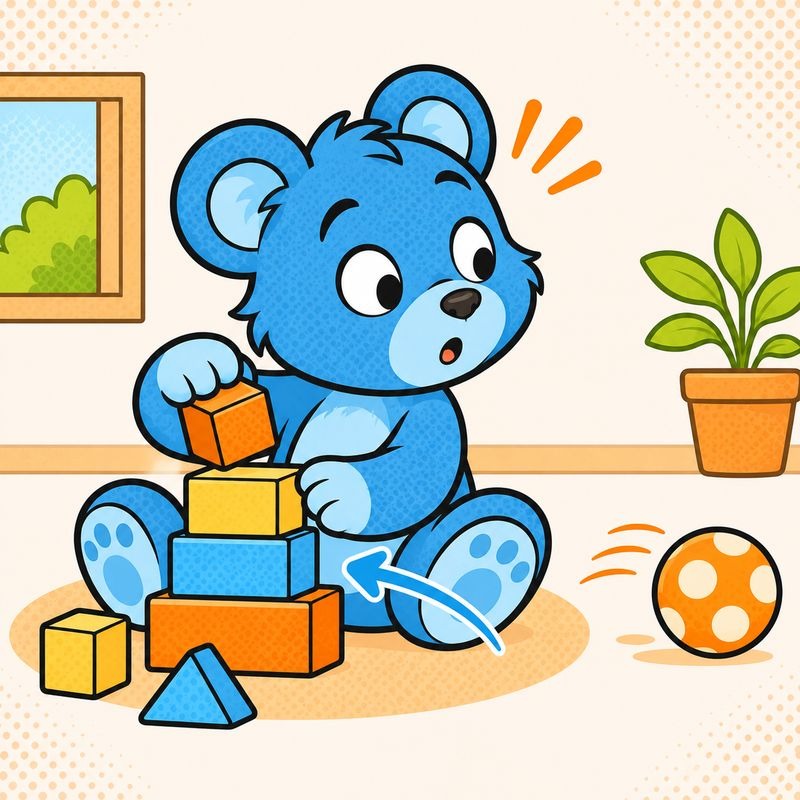 Losing track in play